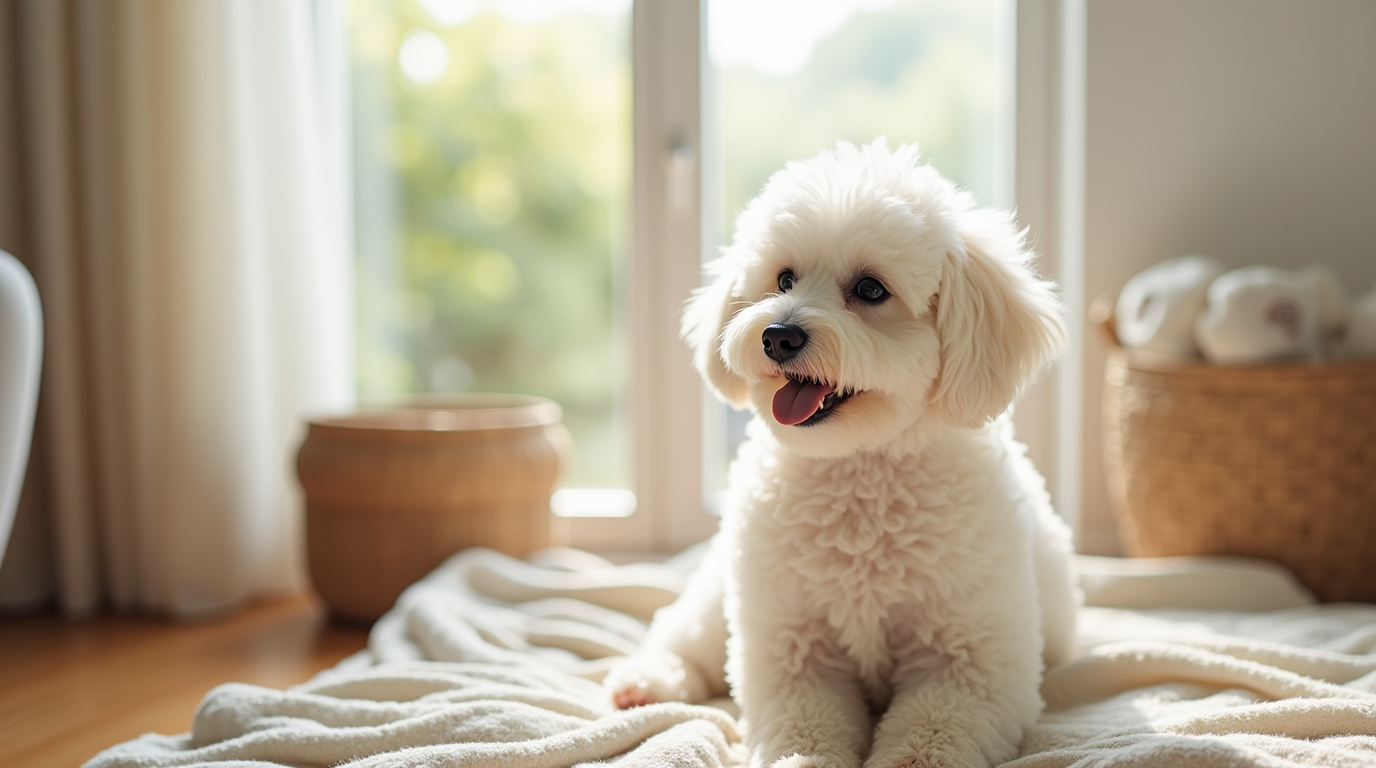
Bichon Frises are adored for their "living cotton ball" appearance—but as an owner, you know the reality. That fluffy white coat tangles quickly, and the skin underneath can be surprisingly sensitive. Unlike many breeds, Bichons barely shed at all, which sounds wonderful—until you realize it means consistent brushing and skin monitoring are non-negotiable. This guide helps you understand the unique structure of the Bichon's curly double coat and provides evidence-based, at-home strategies for coat and skin health.
01What Makes the Bichon Frise Coat Special: Why Matting and Skin Issues Are So Common
The Bichon Frise doesn't have a single coat—it has a curly double coat. The undercoat is soft and dense, while the topcoat grows in tight, spring-like curls. This structure means that when hair naturally sheds, it doesn't fall to the floor; instead, it gets trapped inside the coat, giving Bichons their reputation as a low-shedding breed. However, if left unmanaged, this leads to severe matting and poor air circulation to the skin.
Bichons are also genetically predisposed to allergic dermatitis and atopy. The skin beneath that white fur can easily become red, flaky, or inflamed. With higher sebum production and trapped moisture, the risk of Malassezia yeast overgrowth increases. For Bichons, coat care isn't just cosmetic—it's a core component of skin health.
02Daily Brushing: How to Maintain a Mat-Free White Coat
The Bichon's curly coat requires brushing at least 4–5 times per week, ideally daily. Use a slicker brush to work through both the undercoat and topcoat in layers, then finish with a stainless steel comb to check for any hidden mats.
- The neck, armpits, and inner thighs are high-friction areas where mats form fastest.
- Before brushing, lightly mist the coat with a grooming spray or water to reduce static and prevent hair breakage.
- If you encounter a mat, don't force the brush through it—gently tease it apart with your fingers first, then brush.
Just 5–10 minutes of daily brushing can improve airflow to the skin and reduce the buildup of dead skin cells and sebum, which may help prevent dermatitis.
03Bath Routine: A 3-Step Process to Protect White Fur and Soothe Skin
Step 1: Brush Completely Before the Bath
Mats tighten when wet and become nearly impossible to remove. Always brush your Bichon thoroughly before getting them wet.
Step 2: Use a Gentle Shampoo to Protect the Skin Barrier
Bichons have sensitive skin, so choose a pH-balanced (mildly acidic), fragrance-free, hypoallergenic dog shampoo. Lather the shampoo in your hands first, massage it into the skin (not just the coat), and rinse thoroughly to avoid residue. If you're concerned about staining on white fur, tea tree or oatmeal-based shampoos are commonly recommended.
Step 3: Dry Completely While Brushing
After towel drying, use a blow dryer to dry the coat 100%, all the way down to the undercoat. Any remaining moisture can lead to yeast overgrowth and odor. Brush with a slicker as you dry to straighten the curls and add volume.
04Diet and Coat Health: Supporting White Fur and Skin from Within
Healthy skin and coat depend on balanced nutrition, particularly essential fatty acids (omega-3 and omega-6), zinc, and vitamins A and E. Because Bichons are prone to allergies, grain-free or limited-ingredient diets are often recommended to reduce the risk of food-related reactions.
As a home care supplement for coat and skin health, products like ANITOK Hair—which contain white wood ear mushroom extract—may be helpful. White wood ear mushroom is traditionally known for its potential moisturizing benefits, and daily supplementation may support coat condition from the inside out.
However, supplements should never replace a balanced diet and proper grooming routine. If you suspect a specific skin condition, consult your veterinarian before starting any supplement.
05Regular Grooming and Sanitary Trims: Creating Opportunities to Monitor Skin Health
Because the Bichon's hair grows continuously, professional grooming every 4–6 weeks is essential. During grooming, sanitary trims around the eyes, paw pads, and anus can help prevent tear staining and skin infections.
When visiting the groomer, ask for feedback on any redness, scaling, or odor on the skin. At home, part the coat once a week to visually inspect the skin. Bichons' thick coats can hide skin problems, so early detection is critical.
06Common Skin Issues and Prevention Checklist
The most frequently reported skin problems in Bichon Frises include atopy, allergic dermatitis, Malassezia dermatitis, and tear staining. These conditions result from a combination of genetic predisposition, environmental allergens, humidity, and diet.
- Brush and dry thoroughly to maintain airflow to the skin.
- Keep indoor humidity between 40–60% and wash bedding weekly.
- Wipe tear stains daily with lukewarm water and check for food allergies.
- If your dog is scratching or licking excessively, see a veterinarian immediately to identify the underlying cause.
Preventive care can reduce many skin issues, and early intervention significantly improves treatment outcomes.
· Skin is red, warm to the touch, and oozing or foul-smelling
· Your dog is constantly scratching or licking a specific area, causing hair loss
· Dandruff or flaking has suddenly worsened, and the coat feels greasy
· Tear staining is darkening and the area around the eyes is swollen or inflamed